A Guide of South India Tour
15 Apr 2021



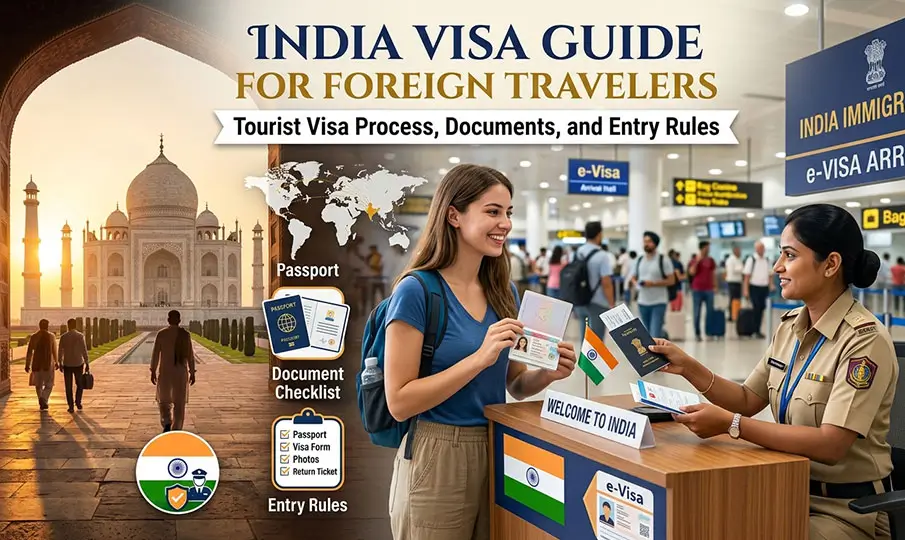
Understanding the India visa guide for foreign travelers is the most important step before booking flights or finalizing an itinerary. Regardless of travel style, nationality, or duration of stay, proper entry authorization is mandatory for most international visitors. India has streamlined its visa system over recent years, making the application process more accessible through online platforms. However, many travelers still feel uncertain about documentation requirements, processing timelines, and entry conditions.
India attracts millions of global visitors each year for tourism, business, medical travel, and cultural exploration. Whether planning a Golden Triangle tour, a Rajasthan heritage journey, a Kerala backwater retreat, or a Himalayan adventure, obtaining the correct visa ensures a smooth and stress-free arrival. This comprehensive India tourist visa guide provides detailed insights into visa categories, application procedures, required documents, processing timelines, and important compliance rules.
Proper preparation eliminates confusion and allows travelers to focus entirely on experiencing India’s culture, history, and landscapes.
India offers different visa categories depending on the purpose of travel. For leisure visitors, the most common category is the India tourist visa. This visa allows foreign nationals to enter India for sightseeing, recreation, visiting friends or relatives, and short cultural programs.
The tourist visa may be available as an electronic visa or as a regular stamped visa depending on nationality. The India e-visa for tourists is one of the most popular options because it simplifies the application process and removes the need to visit an embassy in person. The duration of stay and number of permitted entries vary depending on nationality and selected visa validity.
Travelers must carefully select the correct category during the application process. Choosing an incorrect visa type may result in delays or denial of entry. Reviewing official eligibility guidelines ensures accurate submission and smooth approval.
Understanding the appropriate visa classification is foundational for every international visitor planning an India trip.
Whether you’re visiting for tourism, business, or medical purposes, selecting the correct visa is essential.
Chat on WhatsApp Contact UsThe India e-visa application process is entirely online and designed to be user-friendly. Applicants complete a digital form that requires passport details, travel itinerary information, and recent photographs. A scanned copy of the passport’s biographical page is typically required.
After submission, applicants receive confirmation of application receipt. Processing times vary but are generally efficient when documents are correctly uploaded. Once approved, travelers receive electronic authorization via email, which must be printed and presented upon arrival.
Passport validity should extend beyond the planned departure date. Immigration authorities may request proof of onward travel and accommodation bookings. Ensuring documentation accuracy prevents unnecessary delays during arrival.
The digital visa system has significantly simplified travel planning for international tourists, but attention to detail remains essential throughout the process.
Preparing the correct documentation is essential when applying for an India tourist visa for foreign nationals. Most applicants require a valid passport with sufficient blank pages and appropriate validity. A recent passport-sized photograph meeting official specifications must be uploaded.
Applicants may also need to provide travel itinerary details, including arrival and departure dates, accommodation information, and contact details. Payment is completed electronically through approved channels.
Certain nationalities may be required to provide additional documentation. Checking eligibility and document requirements based on nationality ensures a smooth application experience.
Keeping both digital and printed copies of all visa-related documentation is strongly recommended for ease during immigration checks.
While the electronic visa system processes applications relatively quickly, travelers should apply well in advance of departure. Submitting applications several weeks prior to travel reduces stress and allows time to address any potential issues.
Peak travel seasons may experience higher application volumes, potentially influencing processing speed. Applying early provides flexibility and ensures compliance with travel timelines.
Travelers should avoid booking non-refundable flights before visa approval, unless confident in documentation accuracy.
Understanding expected processing timelines enhances planning efficiency and supports confident travel preparation.
Upon arrival in India, travelers present their passport and approved visa authorization to immigration authorities. Biometric data may be collected at designated counters. Immigration officers may request proof of onward travel and accommodation confirmation.
Compliance with entry conditions is crucial. Overstaying a visa can result in fines or restrictions on future travel. Travelers should carefully note permitted duration and entry conditions.
Maintaining a respectful and cooperative approach during immigration procedures ensures smooth entry into the country.
Visa applications may be rejected due to incorrect documentation, passport validity issues, or inaccurate information provided during the application process. Ensuring that all uploaded documents are clear, complete, and correctly formatted reduces rejection risk.
Applicants should carefully review every section of the form before submission. Minor typographical errors can cause delays or complications. Accuracy is critical when completing the India visa application for tourists.
If rejected, travelers may need to reapply with corrected documentation. Planning well in advance allows time to resolve such issues without affecting travel dates.
Tourist visas typically cannot be extended easily. Travelers must depart India before the expiration of permitted stay. Overstaying can result in penalties, fines, or restrictions on future entry.
In exceptional circumstances, extensions may be considered under specific regulations, but relying on extension availability is not advisable. Strict adherence to visa validity ensures compliance and prevents travel complications.
Apply online, skip embassy visits, and receive your visa approval within days. The India e-Visa is the fastest and easiest way to travel for short-term visits.
Chat on WhatsApp Contact UsVisa rules may vary based on nationality. While many countries qualify for the electronic visa system, others may require traditional embassy applications. Travelers should verify eligibility before initiating the application process.
Reviewing nationality-specific guidelines prevents misunderstanding and ensures compliance with entry regulations.
Although not always mandatory for visa approval, comprehensive travel insurance for India trip is highly recommended. Insurance coverage supports financial protection in case of medical emergencies or trip interruptions.
Carrying printed copies of hotel bookings, return flight tickets, and travel insurance documentation supports smooth immigration clearance.
Prepared documentation contributes to efficient entry procedures.
Most nationalities require a valid tourist visa before arrival.
The India e-visa application process is completed online with digital document submission.
Processing times vary, but applications are generally processed efficiently when documents are correct.
Applying well in advance is strongly recommended to avoid last-minute issues.
Tourist visa extensions are generally limited and not guaranteed.
A valid passport, recent photograph, and travel details are typically required.
Yes, carrying printed approval is advisable for immigration procedures.
Applications may be rejected due to incorrect or incomplete documentation.
Travel insurance is recommended though not always mandatory for visa issuance.
Overstaying may result in fines and travel restrictions on future visits.