A Guide of South India Tour
15 Apr 2021



Handling money in a new country can be one of the most sensitive parts of travel, especially when it comes to exchanging currency. Many travelers arrive in India without fully understanding how the system works, which often leads to unnecessary losses through poor exchange rates, hidden fees, or wrong decisions. Understanding currency exchange in India for tourists is essential if you want to manage your travel budget efficiently and avoid financial mistakes.
India operates primarily on cash and digital payments, but foreign currency is not directly accepted in most places. This means that converting your money into Indian Rupees becomes a necessary step early in your journey. The challenge, however, lies in choosing the right method of conversion. Airports, hotels, local exchange shops, and ATMs all offer currency exchange services, but the rates and fees can vary significantly between them.
One of the biggest misconceptions travelers have is assuming that all exchange points offer similar rates. In reality, there can be a noticeable difference between official bank rates and what you actually receive. This difference is often due to service charges, commissions, or unfavorable exchange margins. Understanding how these factors work helps you make smarter decisions.
Another important aspect is timing. Exchanging large amounts at the wrong place or at the wrong time can result in a significant loss over the course of your trip. Travelers who understand how to convert currency in India strategically often save a considerable amount of money.
If you are planning a multi-city journey and want to manage your expenses efficiently while traveling comfortably, you can consult Mr. Mohit at +91-9999822478 or info@indiatripplanners.com for expert guidance and customized travel planning.
Get local tips on money exchange, ATM withdrawals & private travel assistance for a hassle-free India trip.
Choosing the right method to exchange your money can make a significant difference in how much value you retain. The most common options available include airport exchange counters, banks, local money exchange shops, and ATM withdrawals. Each of these methods has its own advantages and disadvantages, and understanding them helps you make informed decisions.
Airport exchange counters are convenient but usually offer the least favorable rates. They are designed for quick transactions rather than cost efficiency, which means you may receive less value for your money. While they are useful for small amounts needed immediately after arrival, relying on them for larger exchanges is not recommended.
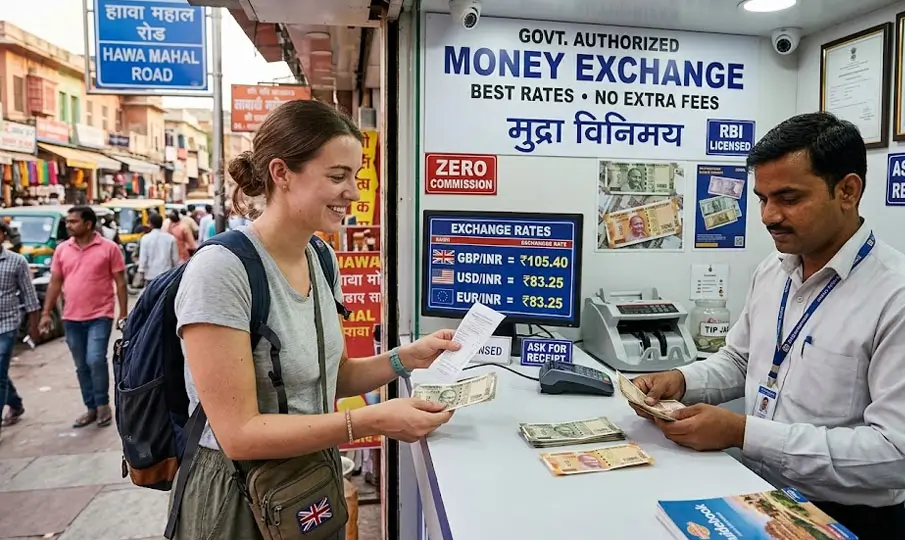
Banks provide a more reliable option with transparent rates, but the process can be time-consuming and may require documentation. Local exchange shops, on the other hand, often offer better rates, especially in major cities and tourist areas. However, it is important to choose authorized dealers to avoid risks.
ATM withdrawals are often one of the most efficient ways to access local currency. Using international debit cards allows you to withdraw Indian Rupees directly, often at competitive exchange rates. However, this method also involves transaction fees and bank charges, which should be considered.
Understanding the best way to exchange money in India involves balancing convenience, cost, and reliability. Travelers who compare options and plan ahead are more likely to get better value for their currency.
One of the most common reasons travelers lose money during currency exchange is due to hidden charges. These charges are not always clearly explained, and many tourists only realize them after completing the transaction. Understanding currency exchange charges in India is essential to avoid these hidden costs.
Service fees, commission charges, and exchange rate margins are the main factors that reduce the value of your money. Some exchange providers advertise “zero commission” but compensate by offering lower exchange rates. This means that even without a visible fee, you may still be losing money.
Dynamic currency conversion is another factor to be aware of. When withdrawing money from an ATM or making a card payment, you may be given the option to be charged in your home currency. While this may seem convenient, it usually results in higher costs due to unfavorable exchange rates.
To avoid these issues, always choose to be charged in local currency and review the transaction details carefully. Comparing rates before exchanging money and avoiding last-minute decisions also helps minimize losses.
Being aware of these hidden factors ensures that you can manage your finances more effectively and avoid unnecessary expenses during your trip.
Get trusted local advice on travel costs, money exchange & comfortable private car tours across India.
Travelers often struggle to decide whether to carry cash, use cards, or rely on ATMs for currency conversion. Each method has its own advantages, and the best approach is usually a combination of all three.
Carrying some cash is essential for small transactions, especially in local markets and smaller towns. However, carrying large amounts can be risky and inconvenient. Cards are widely accepted in hotels, restaurants, and shopping centers, making them a convenient option for larger expenses.
ATMs provide flexibility and are often the most practical way to access local currency. They allow you to withdraw money as needed, reducing the need to carry large amounts of cash. Understanding cash vs card in India travel helps you balance these options effectively.
The key is to adapt your payment method based on the situation. Using the right combination ensures that you can handle different scenarios without facing difficulties.
Managing currency exchange effectively requires a combination of planning and awareness. Simple strategies can help you save money and avoid common mistakes.
Exchanging small amounts initially and then comparing rates in different locations helps you identify better options. Avoiding airport exchanges for large amounts and using trusted providers ensures better value.
Monitoring exchange rates and understanding your bank’s charges also helps you make informed decisions. Travelers who plan their currency exchange strategy in India carefully often have a smoother and more cost-effective experience.
If you need assistance in planning your trip, managing travel logistics, or understanding local systems.
Mr. Mohit at +91-9999822478
Gmail :- info@indiatripplanners.com
Using airport exchanges for large amounts, ignoring fees, and not comparing rates.
Cards are widely accepted in cities but less so in smaller towns.
Yes, if you use authorized dealers and avoid unverified sources.
Carry enough for daily expenses while relying on cards and ATMs for additional needs.
It allows transactions in your home currency but usually results in higher costs, so it is better to avoid it.
In many cases, yes, but it depends on your bank’s fees and charges.
Exchanging a small amount before arrival and the rest in India often provides better value.
By comparing rates, avoiding dynamic currency conversion, and choosing trusted providers.
They are reliable but usually offer lower exchange rates compared to other options.
The best approach is to use a combination of ATMs and authorized exchange centers while avoiding airport exchanges for large amounts.