A Guide of South India Tour
15 Apr 2021




Booking a Delhi to Ranthambore private car is a practical choice for travellers who want door-to-door transport from Delhi to the Ranthambore area without managing railway stations, luggage transfers or separate local taxis. Ranthambore National Park is located near Sawai Madhopur in Rajasthan, and reaching a wildlife lodge or resort by road is different from simply booking transport to a city centre. The exact hotel location, safari schedule and arrival time all matter.
The road distance from Delhi to the Ranthambore area is roughly 370 to 400 kilometres depending on the pickup location and route. Travellers should generally allow around seven to nine hours for a comfortable private-road journey after traffic, meal breaks and local access are considered. A very early Delhi departure can make same-day arrival straightforward, while passengers with an afternoon safari need to be much more careful about relying on a road transfer on the same day.
A private vehicle becomes particularly useful when Ranthambore forms part of a larger North India itinerary. Travellers can travel from Delhi toward Jaipur and Ranthambore, or connect Agra with Ranthambore before continuing into Rajasthan. The same vehicle can remain with the passengers across several cities when the complete route is arranged as a multi-day service.
The Delhi to Ranthambore car with driver cost depends on the vehicle category, one-way requirements, final resort location and whether the service is only a transfer or part of a longer tour. A sedan can work well for two travellers, while an Innova or Innova Crysta offers additional space for passengers carrying international luggage.
The important point is that the road transfer should fit around the safari rather than forcing the safari to fit around an uncertain arrival time. Wildlife permits often have fixed reporting requirements, so transport and accommodation need to be arranged with enough margin.
The Delhi to Ranthambore road distance is approximately 370 to 400 kilometres for many common routes, although the exact total depends on the Delhi pickup point and the location of the accommodation near Sawai Madhopur. A traveller starting from Delhi International Airport may have a different journey from someone staying in central Delhi or another part of the National Capital Region.
A practical private-car journey generally takes around seven to nine hours. Traffic while leaving Delhi can make a major difference, particularly during busy periods. Meal breaks, washroom stops, road conditions and the final approach to the resort can add further time.
Travellers should remember that “Ranthambore” is not a single hotel district. Accommodation is spread around Sawai Madhopur and roads leading toward different areas near the national park. The driver therefore needs the exact hotel or resort name before departure.
An early morning departure from Delhi is usually preferable. Leaving around 6:00 AM to 7:00 AM provides much greater flexibility than beginning after breakfast. Under reasonable conditions, travellers can reach the Ranthambore area during the afternoon, check into the hotel and keep the evening free.
Anyone holding a safari reservation for the afternoon should be far more conservative. Road travel can encounter unpredictable delays, and a missed safari reporting time may result in the traveller losing an important part of the visit. Arriving in Ranthambore the previous day is the safer arrangement.
The Delhi to Ranthambore private transfer is particularly convenient for travellers carrying large luggage. Bags remain in the same car from the Delhi hotel to the wildlife resort, and passengers avoid station platforms and separate local transfers.
Senior travellers and families can also request comfort breaks according to their needs. The journey is long enough to require sensible stops but short enough to complete in one day without an overnight break when the itinerary allows.
The cost of a private car from Delhi to Ranthambore should be judged according to the complete service rather than a headline kilometre rate. Long-distance tourist transport can contain fuel, tolls, parking, driver allowance and one-way vehicle operating costs, and different companies package these expenses differently.
For a direct one-way transfer, a sedan can broadly be budgeted at approximately ₹11,000 to ₹16,000 on a higher-side private-tour basis. An Innova or similar MPV may cost around ₹14,000 to ₹19,000, while an Innova Crysta Delhi to Ranthambore transfer can broadly fall around ₹16,000 to ₹22,000 depending on travel date, vehicle availability, pickup point and included road expenses.
These figures are indicative budgeting ranges rather than fixed tariffs. The final quotation can move according to operating conditions and the exact service requested.
Travellers should check whether the fare ends at Sawai Madhopur or includes delivery to their actual resort. A property located farther from the main town may create additional distance and driver time.
Multi-day transport is calculated differently. If the same driver takes travellers from Delhi to Jaipur, Ranthambore, Agra and another destination, the service may be priced as a complete tour. A sedan can broadly fall around ₹5,500 to ₹8,000 per touring day, while an Innova can require approximately ₹7,000 to ₹10,000. An Innova Crysta can reach around ₹8,500 to ₹11,500 per day depending on the route and daily kilometres.
A five-day route containing Delhi, Jaipur and Ranthambore could therefore place the transport component around ₹32,000 to ₹48,000 for a sedan and approximately ₹40,000 to ₹60,000 or more for an upgraded MPV.
Hotels and safari permits remain separate unless the package specifically states otherwise.
A direct Delhi to Ranthambore taxi with driver is suitable for travellers who want to reach the national park area without adding Jaipur, Agra or another sightseeing destination. The service can begin at a Delhi hotel, airport or agreed residential address and finish directly at the selected Ranthambore resort.
This is especially convenient when the traveller has already completed Delhi sightseeing and wants a straightforward transfer before the wildlife portion of the holiday.
A morning departure gives the best balance. Travellers can stop for breakfast or lunch during the journey and reach the hotel with enough time to check in before evening. A relaxed arrival is valuable because many Ranthambore visitors begin early the following morning for a safari.
A late Delhi departure should be considered carefully. Reaching an unfamiliar wildlife resort late at night after eight or nine hours on the road can be tiring, particularly for families and senior visitors.
The direct service also works well for travellers with several pieces of luggage. Wildlife lodges and resorts are not always located next to major transport hubs, so door-to-door transport removes the need for another vehicle after reaching Sawai Madhopur.
Two passengers can use a sedan when luggage is moderate. An Innova Crysta with driver to Ranthambore offers more room and can be worthwhile for travellers who will keep the vehicle for additional Rajasthan sectors.
The car used for the Delhi transfer should not be confused with the safari vehicle. Entry into the national park is controlled separately, and ordinary tourist cars do not simply drive into safari zones. The wildlife safari must be arranged under the applicable park system.
The biggest difference between a normal city transfer and a Delhi to Ranthambore tour by private car is the safari schedule. A hotel check-in can usually tolerate a road delay. A booked wildlife safari has a specific operating window and reporting process, making late arrival far more consequential.
Safari timings vary by season and can change according to park administration requirements. Morning safaris begin early, while afternoon safaris operate within a separate time window. Travellers should use the confirmed reporting instructions on their safari booking rather than relying on old timings found online.
If the first safari is scheduled for the morning after arrival, a same-day Delhi–Ranthambore transfer works comfortably when passengers leave Delhi early. They can arrive, check in, have dinner and rest before the early start.
Booking an afternoon safari on the same day as a road departure from Delhi creates greater risk. Even if a map suggests that the drive can be completed in time, Delhi traffic or an unexpected road delay can eliminate the margin.
For international visitors with limited days, losing one safari can be particularly disappointing. The accommodation schedule should therefore protect the safari reservation.
Two nights in Ranthambore is a useful minimum for many travellers because it can support more than one safari opportunity while allowing a proper hotel stay. Three nights provides additional flexibility for wildlife-focused visitors.
Travellers should also understand that tiger sightings are never guaranteed. Ranthambore is a natural wildlife environment rather than a zoo, and the value of the safari includes the landscape, birdlife and other wildlife as well as the possibility of seeing a tiger.
Jaipur is the most natural major tourism addition for travellers combining Rajasthan heritage with Ranthambore wildlife. Rather than driving directly from Delhi to the national park, passengers can spend two nights in Jaipur and then continue to Ranthambore.
Delhi to Jaipur is approximately 280 kilometres and generally requires around five to six hours by private car. A first-time visitor should ideally give Jaipur a complete sightseeing day after arrival.
Amber Fort, City Palace, Jantar Mantar and the historic city area can form the core of the stay. Travellers can then leave for Ranthambore the following morning.
The Jaipur to Ranthambore private car sector is approximately 180 to 200 kilometres depending on the hotel locations and commonly requires around three and a half to four and a half hours. This is considerably easier than driving from Delhi directly to Ranthambore.
A route containing Delhi, Jaipur and Ranthambore therefore works well for travellers who want a combination of urban heritage and wildlife. The same private driver can handle hotel transfers and intercity road travel while the safari itself remains a separate park activity.
A four-day itinerary can cover the route at a compact pace, but five or six days provides better balance. Two nights in Jaipur and two nights in Ranthambore gives both destinations meaningful time.
Travellers can continue from Ranthambore toward Agra, return toward Jaipur or move deeper into Rajasthan depending on the wider itinerary.
A Delhi Jaipur Ranthambore private tour should therefore be quoted as a connected multi-day service rather than as two unrelated taxi transfers when the same vehicle is required throughout.
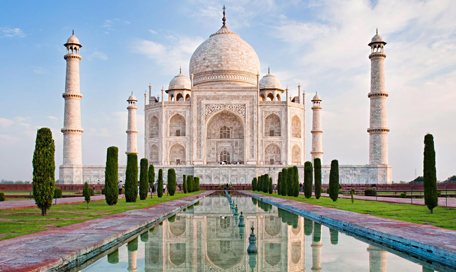
Agra can also be connected with Ranthambore, creating a route that combines the Taj Mahal with a wildlife stay. This is particularly relevant for travellers already following a Golden Triangle-style itinerary.
A possible route moves from Delhi to Agra, continues from Agra toward Ranthambore and later reaches Jaipur. Another version begins Delhi–Jaipur–Ranthambore and then continues toward Agra. The better order depends on the rest of the itinerary and the final departure point.
The Agra to Ranthambore private car sector is a substantial road journey, and travellers should keep enough time available rather than placing an important safari immediately after the transfer.
When Agra is included, the Taj Mahal visit itself requires attention to timing. Travellers often prefer an early visit before continuing elsewhere, but combining major sightseeing and a long intercity drive can create a demanding day.
The advantage of private transport is luggage continuity. Passengers can leave their hotel, visit attractions according to the agreed arrangements and continue to the next destination without handling separate rail or local taxi bookings.
A Delhi Agra Ranthambore private car tour becomes particularly useful for couples and families who want private road travel rather than switching between trains and local vehicles.
Travellers should allow enough nights for the route. Trying to combine Delhi, Agra, Ranthambore and Jaipur in only a few days can leave little time for the actual safari experience.
The wildlife stay should remain one of the central parts of the itinerary rather than becoming a rushed overnight between monument cities.
One night is technically possible but provides very little margin. A traveller might arrive in the afternoon, take a safari the following morning and leave immediately afterward. This can work when time is extremely limited, but it makes the visit vulnerable to delays and offers only one wildlife drive.
Two nights provides a much better structure. Travellers can arrive on the first day, complete one or two safari sessions during the stay and depart after the second night according to the confirmed schedule.
Three nights is worthwhile for visitors with a stronger wildlife interest. Multiple safari opportunities provide different experiences because routes, wildlife movement, weather and light can vary between morning and afternoon drives.
Hotel choice also becomes more important with a longer stay. Ranthambore has accommodation ranging from comfortable hotels to resort-style properties and high-end wildlife lodges.
A Ranthambore tour package from Delhi should therefore show the number of nights clearly rather than simply state that Ranthambore is included. A package with one rushed night is not equivalent to a route giving the destination two or three nights.
Travellers should also look at meal arrangements. Many wildlife resorts offer packages including breakfast and dinner, while some provide broader meal inclusions. This can be convenient because guests may leave very early for morning safaris and spend more time at the resort than they would at a city hotel.
Safari permits and vehicle arrangements should be shown separately from the room price so that travellers understand exactly what the package contains.
A sedan is the economical private option for one or two travellers with moderate luggage. It can comfortably handle the Delhi–Ranthambore journey when passengers do not require additional cabin space.
Luggage should still be considered carefully. International travellers often carry larger suitcases, and wildlife trips can involve additional bags, jackets or camera equipment. The correct vehicle therefore depends on what passengers are actually carrying rather than simply how many people are travelling.
An Innova provides greater passenger and luggage capacity. An Innova Crysta Delhi to Ranthambore private car costs more but offers additional space for a long road journey.
The larger vehicle becomes more attractive when Ranthambore is only one part of a longer route. Travellers continuing to Jaipur, Agra, Udaipur or another destination may spend many hours inside the same vehicle over several days.
Families should provide both passenger and luggage numbers. Four passengers with several large suitcases can require more space than expected.
Larger groups may need a Tempo Traveller. This provides more seating and practical luggage capacity while keeping the group together.
The tourist road vehicle does not determine the safari vehicle. Travellers may arrive in Ranthambore in a private sedan or Crysta and then use the authorised safari vehicle assigned or booked under the applicable safari arrangement.
That distinction should be clear before booking so that passengers do not assume their Delhi vehicle will enter the national park.
Accommodation around Ranthambore ranges from straightforward comfortable hotels to premium wildlife resorts and luxury properties. The hotel standard can make a major difference to the complete tour cost, especially when meals are included.
A comfortable room for two can broadly cost around ₹5,000 to ₹8,000 per night depending on the property and travel dates. Stronger four-star or resort-style accommodation may fall around ₹8,000 to ₹15,000 or more. Premium wildlife and luxury properties can exceed ₹20,000 per night and rise substantially beyond that level.
The location of the hotel also matters. Travellers should provide the exact property name when booking their private car Delhi to Ranthambore, because resorts are spread across the wider Sawai Madhopur and park-access area.
Meal basis deserves attention. A city hotel may be quoted with breakfast only, while a wildlife resort may offer breakfast and dinner or another meal arrangement. This affects the value of two apparently different room prices.
Travellers with early morning safaris should ask how breakfast is handled. Some properties may provide suitable arrangements for safari guests, but this should be confirmed directly within the booking.
A Delhi to Ranthambore package with hotel should state the hotel name or at least a representative property, room category, number of nights and included meals.
A low package price can sometimes be achieved by reducing hotel quality or providing only one night. Travellers should compare the actual stay rather than looking only at the total figure.
Consider a couple taking a five-day journey combining Delhi, Jaipur and Ranthambore. They want a private vehicle, comfortable hotels and sufficient time for Jaipur sightseeing and a wildlife stay.
Transport for five days can broadly require around ₹32,000 to ₹48,000 for a sedan depending on total kilometres and included sightseeing. An Innova or Innova Crysta can move the transport budget toward approximately ₹40,000 to ₹60,000 or higher.
Four hotel nights at comfortable properties might add around ₹22,000 to ₹35,000 for one double room. Better four-star accommodation can place the hotel component around ₹35,000 to ₹55,000 or more.
Safari expenses need to be added according to the confirmed booking category, vehicle arrangement and current official charges. Because park fees and safari procedures can change, travellers should use the actual booking quotation rather than an old fixed figure.
A comfortable Delhi Jaipur Ranthambore tour with private driver can therefore broadly require approximately ₹65,000 to ₹1,15,000 for two travellers before certain safari expenses, depending on hotels and vehicle category. Stronger resorts, upgraded transport and premium accommodation can move the total higher.
The important comparison is what the package contains. Two quotations can differ by ₹20,000 because one contains better hotels, more nights or an upgraded vehicle.
Travellers should request an itemised structure showing transport, hotels and safari-related expenses rather than receiving only one unexplained total.
A written quotation for a Delhi to Ranthambore car rental with driver should state the pickup point, destination hotel, date, vehicle category and whether the service is one way or multi-day.
Fuel, tolls, parking and driver allowance should be clearly identified. The traveller should know whether the stated price is the final transport amount or whether compulsory expenses will be collected during the journey.
If the same vehicle remains with passengers for several days, the quotation should specify local sightseeing and onward sectors. Driver overnight expenses should also be handled according to the agreed terms.
Passenger accommodation should be listed separately when included. The number of rooms, number of nights, meal basis and hotel category should be visible.
Safari arrangements deserve their own section. The traveller should know whether the package includes only the road transfer and hotel or also contains a confirmed safari booking. A general statement such as “Ranthambore safari included” is not enough without further details.
Professional guides, monument tickets in other cities and personal expenses should also be identified as included or excluded.
Payment and cancellation conditions matter particularly for wildlife travel because safari permits can have different amendment and cancellation rules from hotels and private transport.
India Trip Planners can arrange Delhi to Ranthambore transport as a direct private transfer or as part of a longer route containing Jaipur, Agra and other North India destinations.
Travellers requesting a direct transfer should provide their date, Delhi pickup point, exact Ranthambore hotel or resort, number of passengers, luggage quantity and preferred vehicle category. Safari dates and approximate reporting requirements should also be shared when already confirmed so that the road schedule leaves adequate margin.
For multi-day travel, passengers should provide the complete sequence of cities. A route containing Delhi, Agra, Ranthambore and Jaipur has different transport requirements from a direct Delhi–Ranthambore transfer.
Hotel accommodation can be added according to the required standard. Comfortable hotels, four-star resorts and premium wildlife properties create very different package totals, so the preferred category should be stated clearly.
Travellers requiring safari assistance should also distinguish between transport to Ranthambore and the actual park safari. These are separate services and need separate confirmation.
A properly arranged Delhi to Ranthambore private driver booking should protect the most time-sensitive part of the visit: the safari. The road departure, hotel check-in and wildlife reservation should work together with sufficient margin rather than depending on an unrealistically fast road arrival.
A Delhi to Ranthambore private car can broadly cost around ₹11,000 to ₹16,000 for a sedan on a higher-side private-tour basis. An Innova may cost approximately ₹14,000 to ₹19,000, while an Innova Crysta can reach around ₹16,000 to ₹22,000. Exact pricing depends on the pickup point, resort location, vehicle and included road expenses.
Travellers should generally allow around seven to nine hours for the road journey, depending on Delhi traffic, breaks, road conditions and the exact Ranthambore accommodation. An early departure is preferable, particularly when travellers want enough time to check into their resort and rest before a safari.
It can be risky because a road delay may cause the traveller to miss the required safari reporting time. Arriving in Ranthambore the previous day is a safer arrangement for an important pre-booked safari. The confirmed permit instructions should always determine the schedule.
Yes, particularly for first-time Rajasthan visitors. Delhi to Jaipur generally takes around five to six hours, while Jaipur to Ranthambore by private car takes approximately three and a half to four and a half hours. Two nights in Jaipur can provide proper sightseeing before continuing to the wildlife stay.
Yes. Agra can be linked with Ranthambore as part of a Delhi, Agra, Ranthambore and Jaipur route. Enough road time should be allowed between destinations, and an important safari should not be scheduled too close to the expected arrival after a long transfer.
Two nights is a practical minimum for many first-time visitors because it allows a more comfortable arrival and creates room for safari activity. Three nights can be worthwhile for wildlife-focused travellers who want additional safari opportunities. A single night is possible but provides very little margin.
A sedan works well for two passengers with moderate luggage. An Innova Crysta with driver provides more cabin and luggage space and is useful when Ranthambore forms part of a longer private road journey. Larger families and groups may require a Tempo Traveller.
No. The long-distance tourist car provides road transport to the Ranthambore area and other agreed destinations. National park safaris operate under separate authorised arrangements. Travellers should have their safari booking and reporting details confirmed independently from the intercity private-car service.
Not automatically. A transport-only quotation generally covers the private vehicle and stated road expenses. Hotels and safari arrangements need to be added separately unless the package clearly states that they are included. Travellers should request an itemised quotation showing each component.
Provide India Trip Planners with your travel date, Delhi pickup location, exact Ranthambore hotel, passenger count, luggage requirements and preferred vehicle. Include your safari dates and any onward cities such as Jaipur or Agra so that the private-car schedule can be arranged around the complete route.